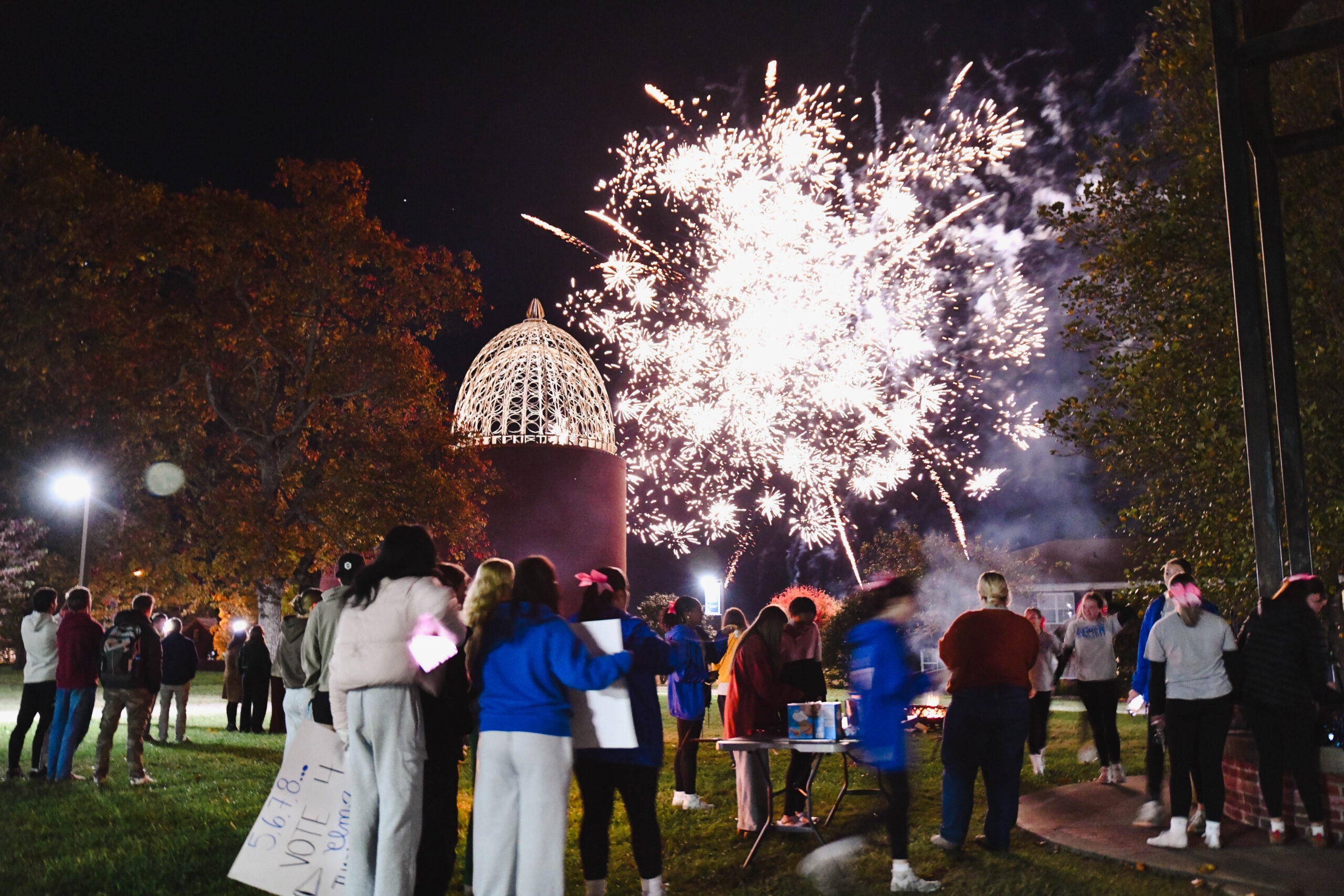
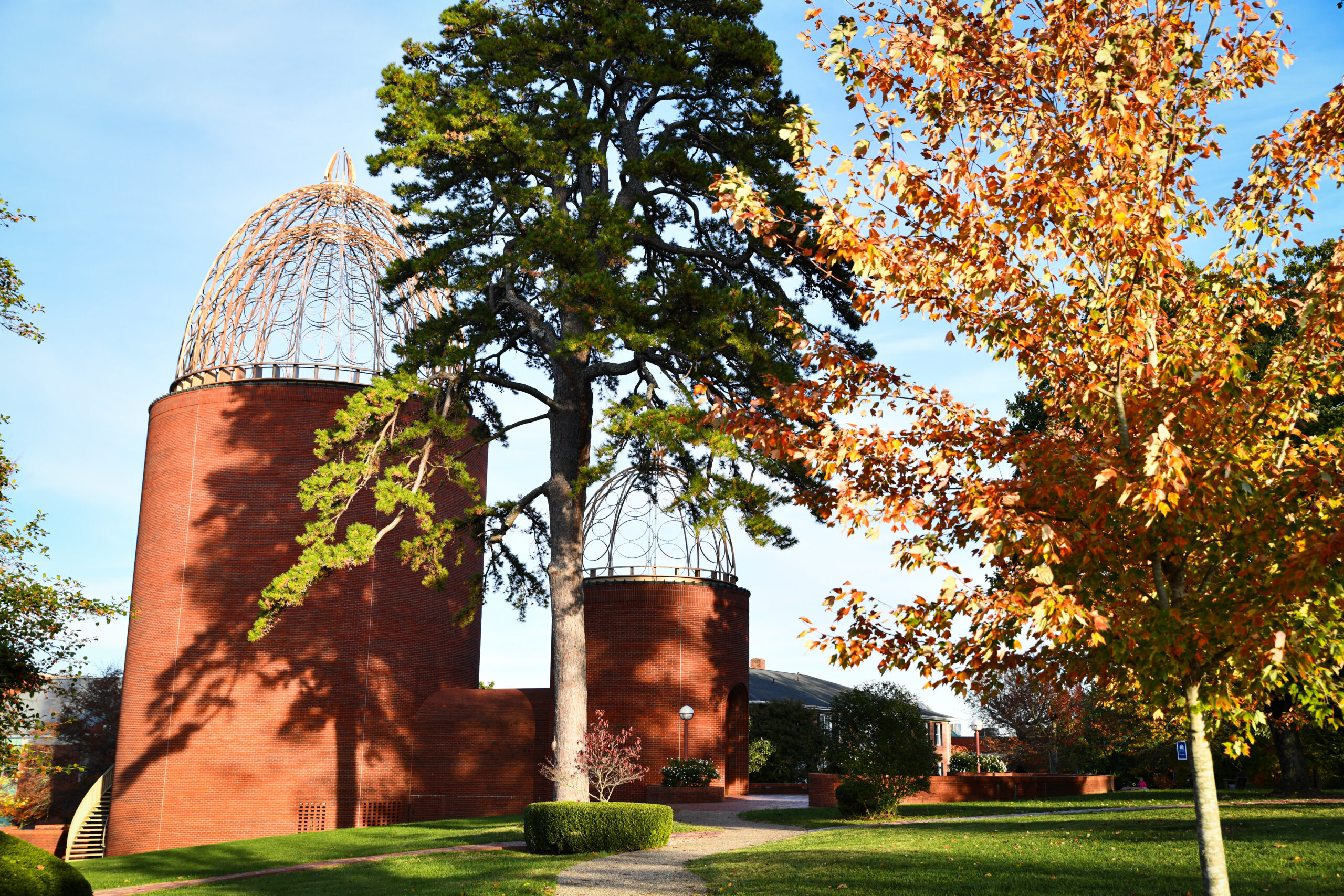
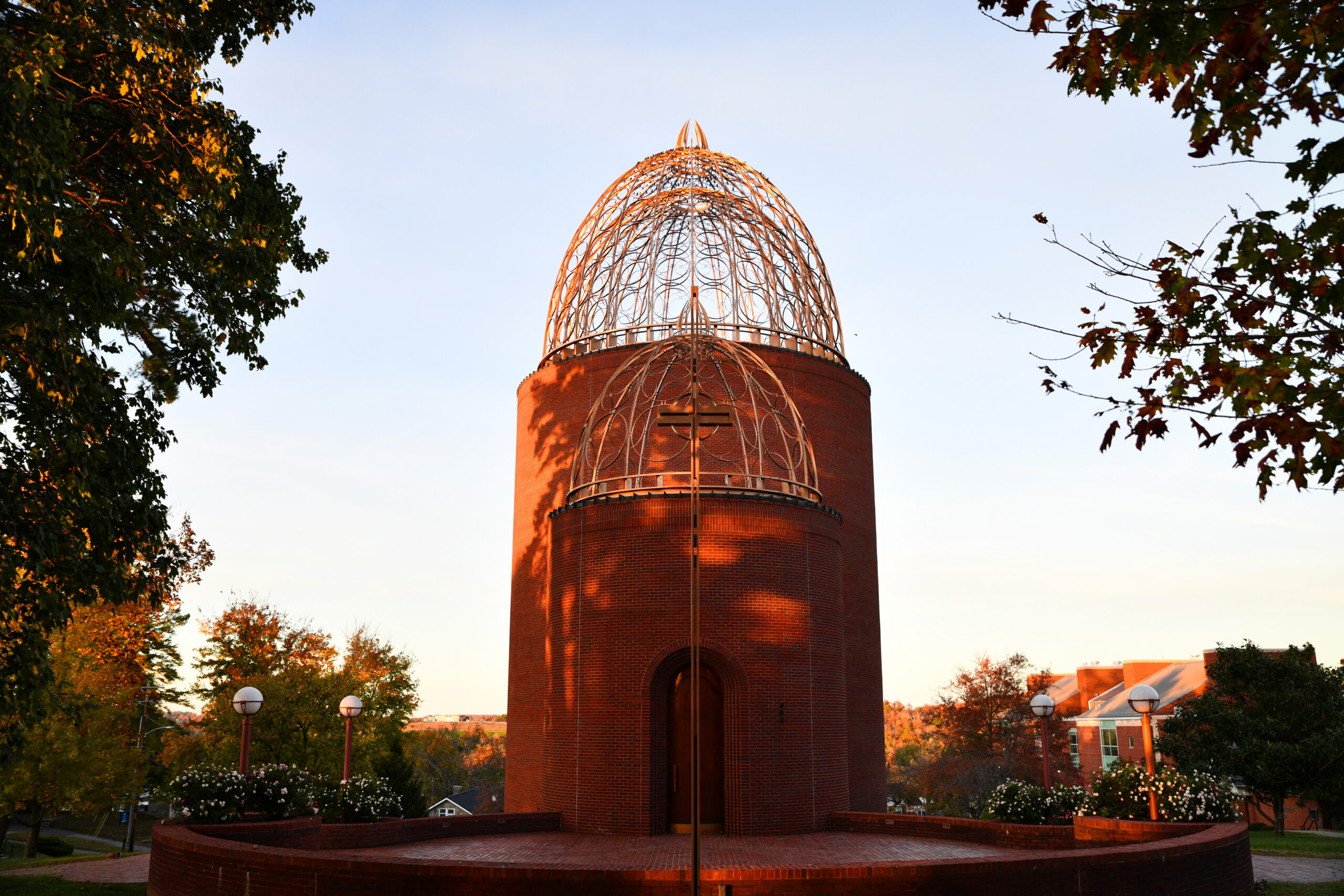
The John B. Begley Chapel is a strong symbol of the spiritual dimension of Lindsey Wilson University.
The purpose of the Begley Chapel is to provide a peaceful place where students, faculty, staff and friends can let down their walls and where they can surrender and relinquish control of their lives to a God that will not abandon them, will not abuse them and will not judge them unfairly, but will love them no matter what and forever.
The chapel was designed by the late world-renowned architect E. Fay Jones.
Jones, a disciple of the legendary American architect Frank Lloyd Wright, who was widely regarded to be one of the world’s leading chapel architects.
The chapel’s basic shapes (the vertical cylinders) were inspired by Southcentral Kentucky rural themes and are topped by the crowns which are highly symbolic sculptures. Circles and arcs are to be found throughout the building and adjacent lighting and grounds, symbolically reflecting the unity and perfection of the circle and certain elements of Christian theology.
Gothic, Romanesque and even Byzantine themes are to be found throughout the Begley Chapel and reflect the ancient foundations upon which the 20th-century edifice are based.
The chapel – which was built by the James N. Gray Co. of Glasgow and Lexington, Ky. – was made possible through a $2 million donation from anonymous donors.
The chapel was named in honor of former Lindsey Wilson University President John B. Begley. The college’s sixth president, President Begley led Lindsey Wilson from 1977 to 1997. He currently serves as the college’s chancellor.
The John B. Begley Chapel is open to the public from 8 a.m. to 4 p.m. Central time Monday through Friday and on some weekends. The Begley Chapel is available for some special events, but its primary purpose is to be a place of quiet meditation.